
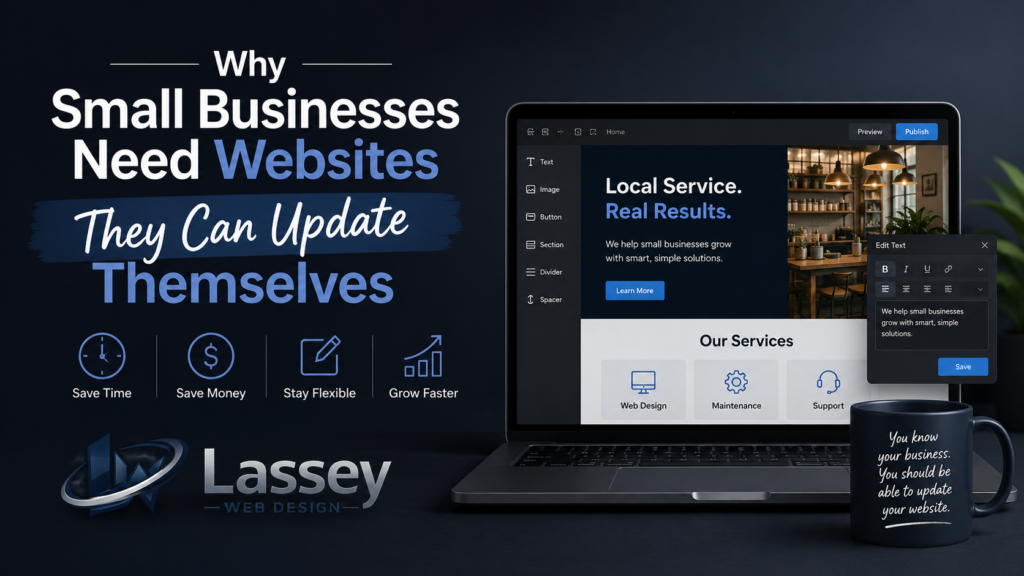
A small business website should not become frozen after launch. Services change, prices may be adjusted, new photos appear, team members come and go, and contact details sometimes need updates. If every small change requires a developer, the website quickly becomes inconvenient and outdated.
For many small businesses, the best website is not the most complex one. It is the one that looks professional, explains the company clearly, and remains easy to maintain after publication.
That is why website manageability should be discussed before the project starts, not after the site is already built.
A Website Is Not a One-Time Document
Many business owners treat a website like a brochure: something created once and left unchanged for years. In practice, a website works better when it stays current.
A local service company may need to add a new service area. A consultant may want to update a biography or add a new offer. A studio may need to replace portfolio photos. A repair business may want to change opening hours. A small shop may need to announce a seasonal promotion.
These are normal updates. They should not feel like a technical project every time.
When a website is easy to edit, the business owner is more likely to keep it accurate and useful.
Outdated Information Can Hurt Trust
Visitors judge a business by what they see online. If a website shows old services, incorrect phone numbers, outdated photos, broken forms, or irrelevant text, it can create doubt.
Even small details matter. A customer may wonder whether the company is still active, whether the service is still available, or whether the business pays attention to communication.
A current website creates a stronger impression. It shows that the company is active, organized, and reachable.
This is especially important for small businesses, where trust often depends on simple signals: clear contact details, fresh service information, real photos, and pages that feel maintained.
Easy Updates Help Control Costs
If every small website edit requires outside help, the total cost of ownership increases. The launch price is only one part of the website budget. Maintenance matters too.
A business owner should be able to handle basic updates such as:
Changing service descriptions
Replacing images
Updating phone numbers or email addresses
Editing opening hours
Adding short announcements
Updating team information
Changing calls to action
Adding new testimonials
Adjusting contact form text
Professional help is still useful for bigger changes, redesigns, SEO work, or technical problems. But routine updates should not always require a separate project.
A manageable website gives small businesses more control over ongoing costs.
Website Structure Affects Manageability
A website becomes easier to update when it is built with clear structure. If every page is chaotic, even small edits can create problems.
Good structure includes logical sections, consistent page layouts, clear headings, reusable content blocks, and simple navigation. This helps the business owner understand where information belongs.
For example, services should not be scattered randomly across the homepage, about page, and footer. Each service should have a clear place. Contact information should be consistent. Testimonials should be grouped logically. Calls to action should follow a repeated pattern.
When the structure is organized, updates are easier and safer.
What Small Businesses Should Be Able to Edit
Not every part of a website needs daily attention. But some areas should be simple to update.
The homepage may need occasional changes to headlines, featured services, or announcements. Service pages may need revisions when offers change. The contact page must always show accurate details. Portfolio sections should allow new projects or photos. Testimonials should be easy to add when customers provide feedback.
For many businesses, the ability to edit these sections is enough. They do not need full technical control over every detail. They need practical editing access to the content that changes most often.
Manageability Does Not Mean Poor Design
Some business owners worry that an easy-to-edit website will look basic or unprofessional. That does not have to be true.
A manageable website can still have a clean design, strong layout, good typography, mobile-friendly sections, and professional visual presentation. The difference is that the site is built in a way that does not trap the owner behind technical barriers.
Good design and easy editing can work together. In fact, a website that can be updated regularly often remains more professional over time than a beautiful site that becomes outdated because no one can change it.
Why This Matters for Local Businesses
Local businesses often need quick updates. A seasonal service may become available. A schedule may change. A new location may open. A phone number may be replaced. A new gallery of completed work may need to be added.
Customers searching for local services want current information. They may be ready to call immediately. If the website gives outdated or incomplete details, the business may lose the inquiry.
A local website should support everyday business activity. It should not slow it down.
When Professional Help Is Still Needed
An easy-to-update website does not mean the business owner should handle everything alone. Professional support is still important for larger changes.
A specialist may be needed for redesigning page structure, creating new landing pages, improving SEO, fixing technical issues, changing navigation, updating brand style, or rewriting important content sections.
The goal is balance. The business owner should manage routine content updates, while more strategic or technical improvements can still be handled professionally.
This keeps the website practical without sacrificing quality.
How Lassey Web Design Approaches Website Manageability
At Lassey Web Design, we plan websites with long-term use in mind. We think about what the business owner may need to change after launch and organize the website accordingly.
This means creating clear sections, understandable page layouts, practical contact blocks, and content areas that can be updated when the business changes.
We also explain how to handle basic updates, so clients are not left with a website they cannot confidently use.
A good website should support the business after launch, not create dependency for every minor edit.
Final Thoughts
For small businesses, website manageability is not a minor detail. It affects trust, cost, communication, and long-term usefulness.
A website that can be updated easily is more likely to stay accurate, relevant, and helpful for customers. It gives business owners more control and makes the website a living part of the company instead of a static file.
Before starting a website project, small business owners should ask an important question: will we be able to keep this site current after launch?
If the answer is yes, the website has a much better chance of staying useful over time.